Cervical Spine Protection: Car Seat Biomechanics
By Rafael Ortiz • 2nd May
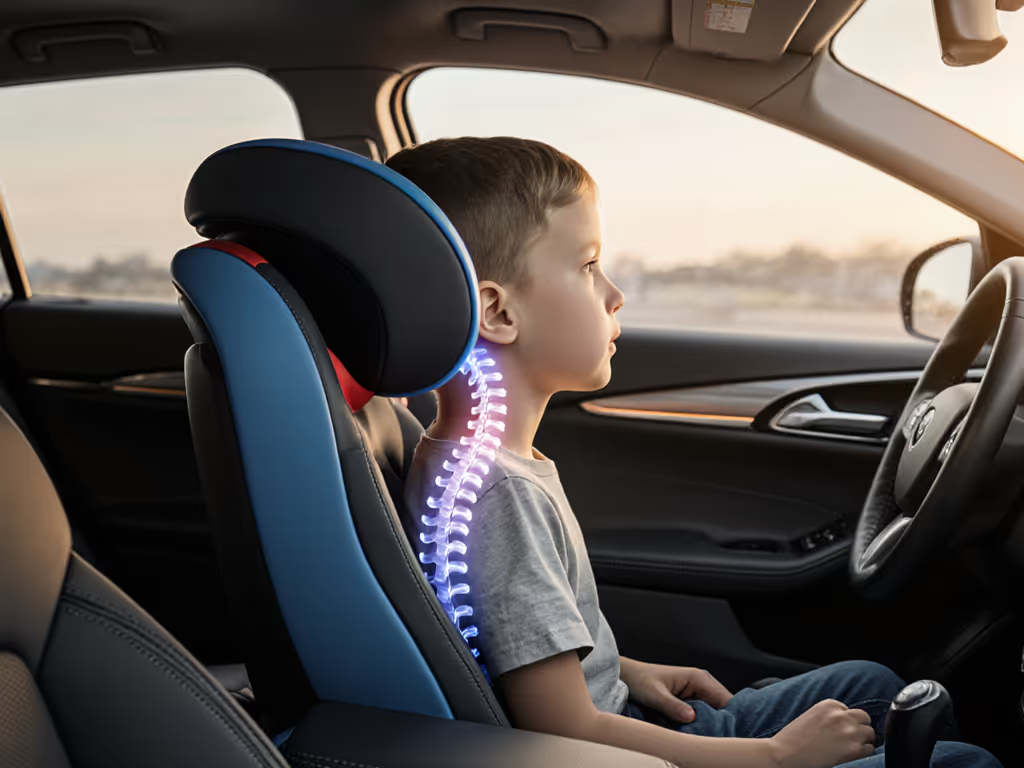
Why Cervical Spine Protection Matters More Than You Think
Your child's cervical spine (the delicate seven vertebrae supporting the head and neck) develops differently than an adult's. Understanding car seat spinal biomechanics isn't just safety jargon; it's the foundation of choosing equipment that protects your child through years of growth. Motor vehicle injuries remain a leading cause of death among children, yet many of these tragedies are preventable through informed geometry and installation precision.[1]
The stakes are real, and so is the clarity you can achieve by understanding how cervical spine car seat protection actually works. This guide walks through the biomechanical reasoning behind current safety recommendations, practical thresholds for upgrading seats, and how to maintain protection consistency across multiple vehicles or caregivers.
What Makes a Child's Cervical Spine Uniquely Vulnerable?
Your infant's spinal anatomy is still developing. Babies' spines are not yet fully ossified (meaning the bones are still cartilaginous and flexible), and their heads are proportionally large for their bodies.[6] In a forward-facing crash, this imbalance creates a dangerous dynamic: if your child is riding forward-facing, their spinal cord may stretch during impact, which could result in serious injury or death.[6]
This isn't theoretical. Crashes are the leading cause of death for children ages 1 to 13.[3] The difference between adequate protection and inadequate protection often comes down to child spine development safety and how the car seat's geometry responds to crash forces.
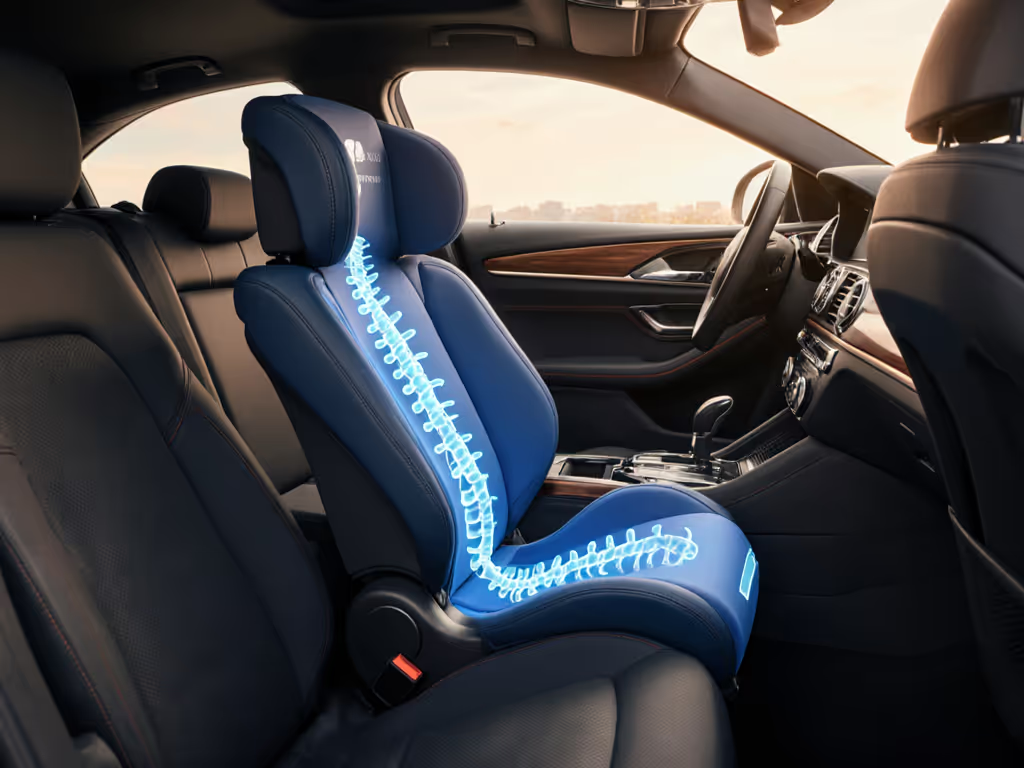
The reason rear-facing seats are so effective is biomechanical, not arbitrary. When your baby rides rear-facing, their upper body (head, neck, and spine) is cradled by the back of the child safety seat in the case of a frontal crash, which is the most common type of crash.[6] The seat shell distributes crash forces across the entire back and head region rather than concentrating stress on the delicate neck and cervical spine.
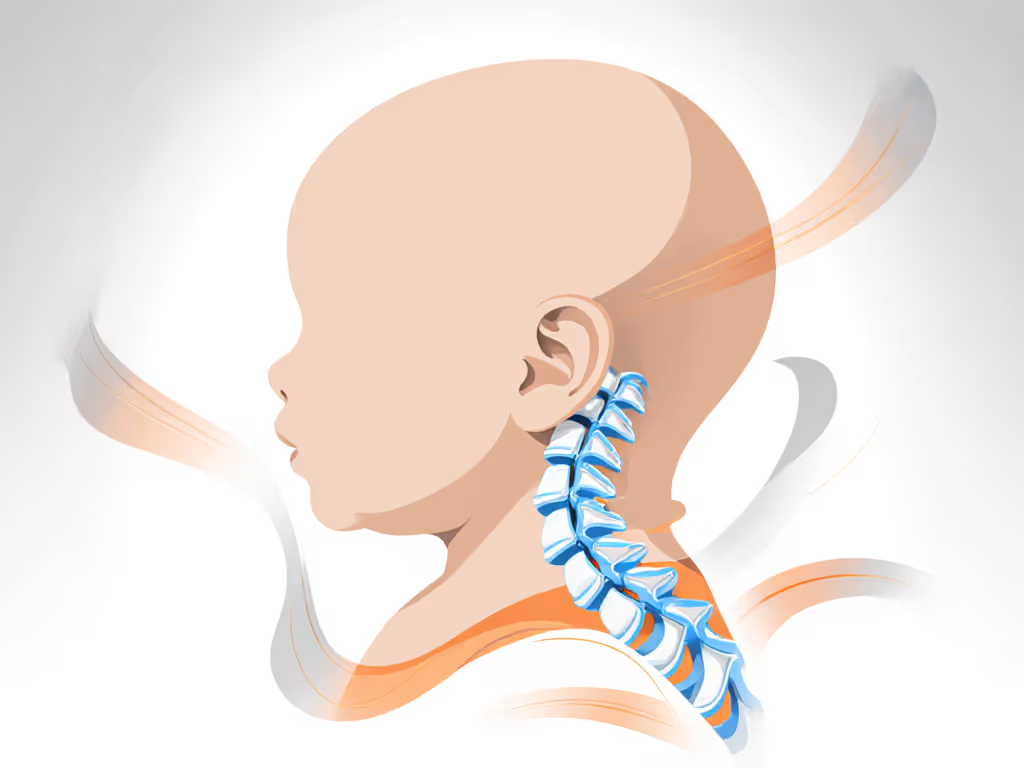
How Car Seat Shell Geometry Shapes Cervical Spine Safety
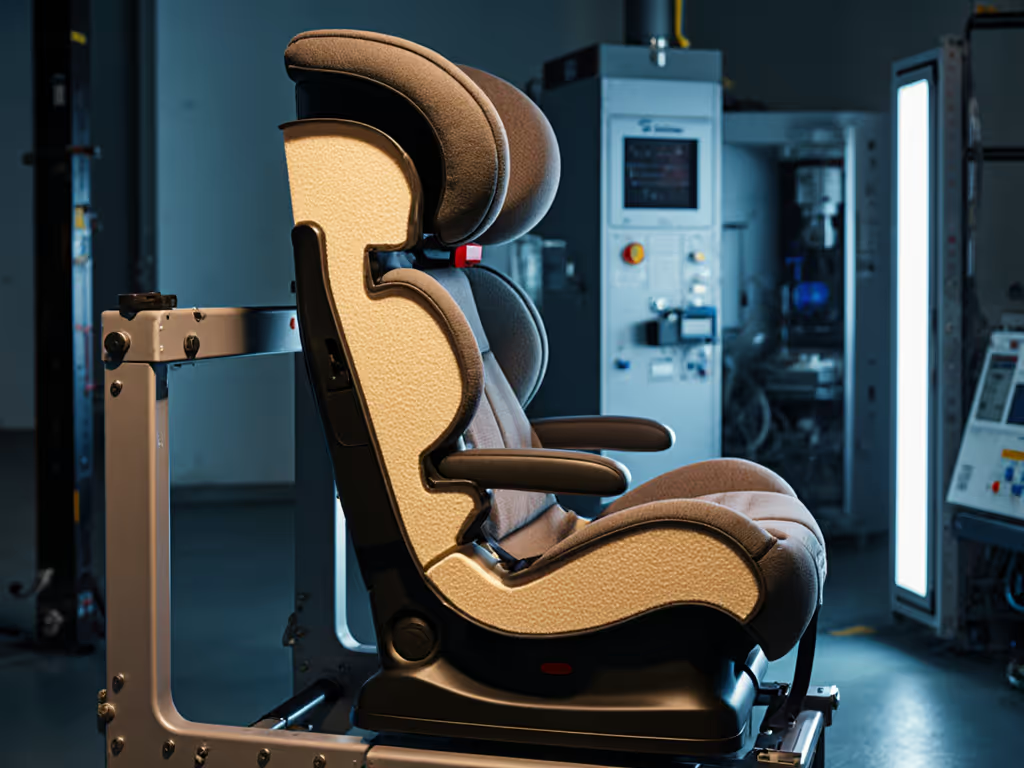
Every honest car seat safety and anatomical engineering choice begins with shell depth and harness-slot positioning. These aren't decorative details; they're the primary mechanisms determining how effectively the seat protects your child's cervical spine during impact.
The shell must be deep enough and contoured to cradle the child's head and neck, preventing whipping or excessive movement during a crash. Similarly, the harness slots (positioned at or just below the child's shoulders) ensure the straps work in concert with the shell to hold your child securely in the protection zone.[5][8]
The Role of Rear-Facing Duration
One of the most significant decisions you'll make is how long to keep your child rear-facing. The CDC and leading pediatric trauma centers recommend keeping children rear-facing until they reach the maximum weight or height limit of their car seat, ideally until age 2-4 years.[7] This isn't a marketing timeline; it reflects biomechanical reality.
The longer your child remains rear-facing, the longer their cervical spine benefits from the cradling protection of the shell. Extended rear-facing is one of the highest-leverage safety choices you can make.[7] For the physics behind this recommendation, see our extended rear-facing science guide. When parents rush to forward-facing seats (often due to perceived comfort or development milestones), they remove the cervical spine from its most protected orientation during the years when it's still developing.
When Does Your Child Outgrow Rear-Facing, and What's the Threshold?
This is where measurement-driven decision-making becomes essential. Children outgrow rear-facing seats based on two thresholds: height and weight limits set by the seat manufacturer.
For height, the key indicator is head position relative to the shell. When the top of your child's head is less than one inch of hard plastic shell above it, the child has outgrown that rear-facing car seat.[8] This isn't a gray area; it's a clear geometric boundary. For step-by-step tips on reading and applying limits, use our rear-facing height limits guide.
Using percentile-aware charts from your pediatrician or growth-tracking tools, you can anticipate when your child will approach these limits. If your child is tracking in the 75th percentile for height, for example, they'll likely reach the rear-facing height limit sooner than a peer in the 50th percentile. This isn't about predicting years; it's about understanding ranges and planning for transitions before crisis forces a premature decision.
Accounting for Growth Across Vehicles
Longevity lives in harness height, shell depth, and honest geometry. If you own multiple vehicles or rely on carpools and multi-caregiver arrangements, seat consistency matters. When you move a rear-facing seat between your sedan and your SUV, the recline angle may shift, the harness geometry relative to your child's torso may change, and the crash-force distribution your car seat depends on could be compromised.
This is why many families benefit from a scenario matrix: mapping each vehicle's seating position, seat-belt path, recline angle, and tether anchor location, then identifying which seats can be installed correctly and consistently across all vehicles. A seat that works brilliantly in one car but requires awkward compromises in another compromises protection where it matters most. Years of careful planning can unravel if a secondary vehicle becomes the weak link, and that's where thorough geometry mapping prevents regret.
What Changes When You Transition to Forward-Facing?
Forward-facing seats introduce different biomechanical considerations. The protection mechanisms now rely primarily on harness tension and the front shell rather than full-body cradling.
When transitioning to forward-facing, harness positioning becomes even more critical. Straps must be positioned at or above the shoulders (unlike rear-facing), and the chest clip must be at armpit level.[5] Slack harnesses or straps routed incorrectly mean the seat cannot transmit crash forces properly to the child's body, and the cervical spine loses protection.
Additionally, head support becomes paramount. Many forward-facing seats include integrated head support or adjustable height slots to keep the head properly positioned during both normal driving and crash events. A forward-facing seat without adequate head support risks allowing the child's head to move excessively during sudden stops or crashes, stressing the cervical spine.
The Role of Infant Cervical Spine Protection During Longer Journeys
During extended drives, proper positioning also affects comfort and blood circulation. While comfort isn't the primary safety concern, excessive slouching or poor head support during long rear-facing periods can lead to postural strain. Seats with deeper shells and better contouring prevent the child's head from rolling to the side during sleep, maintaining neutral cervical alignment even during naps.
Installing Correctly Protects More Than You Might Realize
Proper installation is non-negotiable because it determines whether the seat's geometry actually translates into protection. Many parents install seats correctly once but don't validate the install when moving the seat between vehicles or when another caregiver uses it.
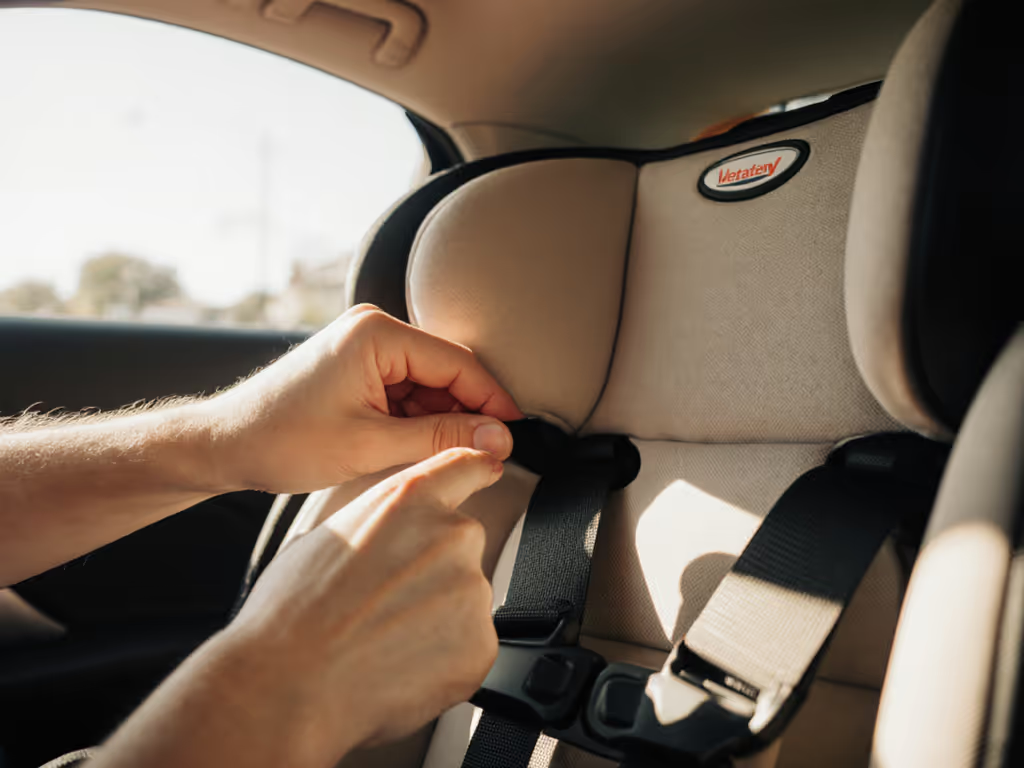
To verify correct installation, grab the bottom of the seat near the attachment points or seat belt path. If you can move the seat more than one inch from side to side or front to back, it's not secured tightly enough.[5] This movement defeats the geometric protection the seat is designed to provide.
If you're using a seat belt to install the seat, ensure the seat belt locks properly to hold the seat tightly. In most newer cars, you can lock the seat belt by pulling it all the way out and then allowing it to retract.[9] Many car safety seats also have built-in lock-offs, eliminating guesswork. For vehicle-specific steps and common mistake fixes, follow our vehicle-tuned installation guide.
Multi-Vehicle and Multi-Caregiver Scenarios: Maintaining Consistency
If your child travels between homes, rides in grandparent vehicles, or uses carpool arrangements, maintaining consistent car seat spinal biomechanics across installations becomes critical.
Rather than moving one seat between multiple vehicles, many families find it pragmatic to own a second seat for a regular second vehicle or for a caregiver's car. This eliminates repeated reinstallation errors and ensures the seat geometry is optimized to each vehicle's seating position from the start. When duplicating setups, use the same seat model if possible, and validate each installation against the vehicle's manual and the seat's installation documentation.
For travel or occasional use (rental cars, taxis, air travel with car seats), lightweight options offer convenience, but verify that they meet the same geometric and installation standards as your primary seats. A lighter seat should not mean compromised cervical spine protection, only streamlined bulk and weight.
How to Stay Confident in Your Geometry and Thresholds
The most pragmatic approach is to establish a measurement checklist for your exact vehicles and seat model:
- Record the recline angle of your car's seat with the car seat installed
- Measure the distance from the vehicle's seat back to the front seat headrest to ensure adequate legroom if your child is rear-facing with long legs
- Note the location of tether anchors and verify your seat will reach them without extreme angles
- Take a photo of correct harness positioning once your install is validated by a certified child passenger safety technician, and refer to it before each trip if another caregiver is buckling your child
- Track your child's height percentile and compare it against the seat's height limit to anticipate outgrowing timelines
These simple steps shift you from reactive decision-making to forward planning, the foundation of car seat safety anatomical engineering that lasts.
Further Exploration: Building Your Confidence
Cervical spine protection becomes less mysterious once you ground decisions in measurement and honest geometry. The next step is validating your specific setup. Connect with a certified child passenger safety technician for an in-person inspection of your installations, ensuring seat geometry aligns with your vehicle's seating, tether locations, and seat-belt routing.
Keep your vehicle owner's manual and seat installation booklet accessible, revisiting them as your child grows. Your attention to percentile charts, scenario matrices, measurement thresholds, and honest geometry is where longevity lives.
Related Articles