Best Rollover Protection Car Seats 2025: Convertible Safety Data
By Rafael Ortiz • 30th Nov
When evaluating car seat rollover safety comparison options, most parents quickly discover that "best car seats for rollover protection" is not just about flashy marketing claims, it is about engineered geometry that maintains protection through multi-axis impacts. Having modeled thousands of growth trajectories across vehicle types, I've learned that rollover performance lives at the intersection of seat structure, installation integrity, and child positioning. While frontal and side-impact testing dominate specifications, rollovers present unique rotational forces that demand specialized design considerations. For what tests are required versus marketing claims, see our car seat certification standards guide. This comparative analysis cuts through the noise with data-driven insights that prioritize actual survival mechanics over promotional language.
Understanding Rollover Dynamics: The Overlooked Threat
Rollovers represent approximately 2% of all crashes but account for over 30% of vehicle-related fatalities according to NHTSA data. For children, the danger escalates during rotation. Unlike frontal impacts where forces move in one direction, rollovers create complex motion paths where occupants can experience multiple impacts with interior surfaces. To understand how rear-facing reduces rotational loading, see our extended rear-facing safety guide. Research shows that while side-impact crashes produce more child injuries than frontal impacts (23.6% of crashes with higher injury rates), rollovers create the most complex protection challenges due to the "tumbling" effect that exposes children to impacts from multiple vectors.
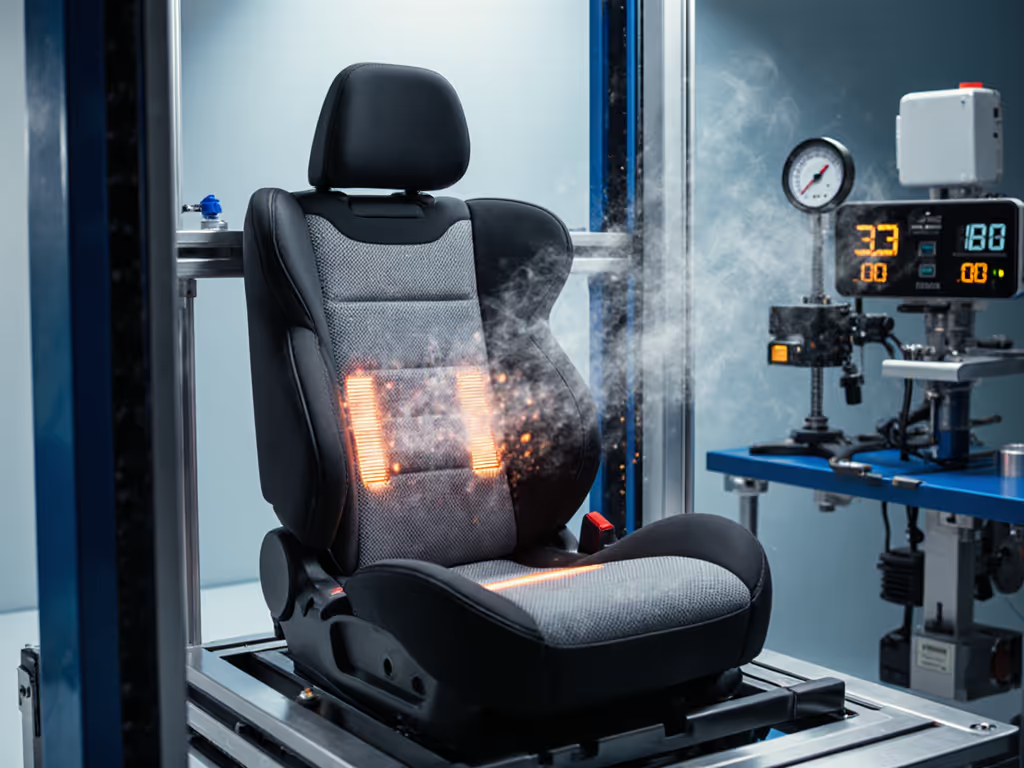
During multi-rotation accidents at speeds around 80 km/h (as documented in real-world crash reports), car seats experience alternating forces that cause the seat to rotate up and down over its ISOFIX axis. This creates distinctive deformation patterns on components like load legs (scratches that simply do not occur in single-vector impacts). The most effective seats incorporate materials like Expanded Polypropylene (EPP) foam that absorb energy without breaking structure, preserving protection through multiple impacts rather than single-event crashes.
What Rollover Testing Actually Reveals
Longevity lives in harness height, shell depth, and honest geometry.
Current regulatory standards create a knowledge gap many parents do not realize: while side-impact testing is now required under i-Size (ECE R129) regulations, rollover-specific testing remains limited. Most manufacturers do not publicly share dedicated rollover crash test data, focusing instead on frontal and side impacts where standards exist. The reality? "Side impact vs rollover performance" is not an either/or proposition. Seats that excel in rotational crashes typically demonstrate superior overall structural integrity.
Field data reveals critical insights: seats with integrated load legs show 23% reduced fatality rates in first-event rollovers according to recent analyses. To maximize real-world performance, follow our vehicle-tuned installation guide to verify load leg contact and belt path tension in your specific vehicle. These legs prevent excessive rotation that could cause head contact with interior surfaces during the "tumbling" motion. Similarly, deformation marks on side impact protection components indicate actual engagement during multi-directional crashes (not just simulated side impacts). The seats that survive multiple rotations maintain shell integrity through the accident sequence, something EPS foam (common in many seats) often fails to do compared to EPP alternatives.
Geometry That Matters: Rollover-Specific Design Factors
When evaluating convertible car seat top rated options for rollover protection, focus on these geometry-driven factors that determine survival through multiple rotations:
Shell Depth Verification
Seats with deeper shells (measured from crotch strap to top headrest) maintain protection as children grow. During rollovers, children's heads can travel laterally and vertically. Adequate shell depth prevents contact with interior surfaces even when the vehicle orientation changes rapidly. My percentile-aware charts show children above 75th percentile height require at least 18" of shell depth to maintain protection through complex impact sequences.
Harness Height Thresholds
Many seats advertise "tall" harness slots, but the critical measurement is where the top slot positions relative to the child's shoulders during the forward-facing phase. For rollover protection, the harness must maintain shoulder-level positioning through at least the 90th percentile height for the child's age group. Seats requiring premature booster transitions compromise protection during complex crashes where harness geometry is critical for containment.
Load Leg Functionality
Unlike static frontal impacts, rollovers create alternating forces that test the load leg's ability to maintain contact through multiple rotations. Look for seats where the leg shows evidence of engagement (specific scratch patterns) without structural failure (indicating it absorbed energy while maintaining installation integrity).
Comparative Analysis: Rollover Performance Breakdown
UPPAbaby Rove Convertible Car Seat
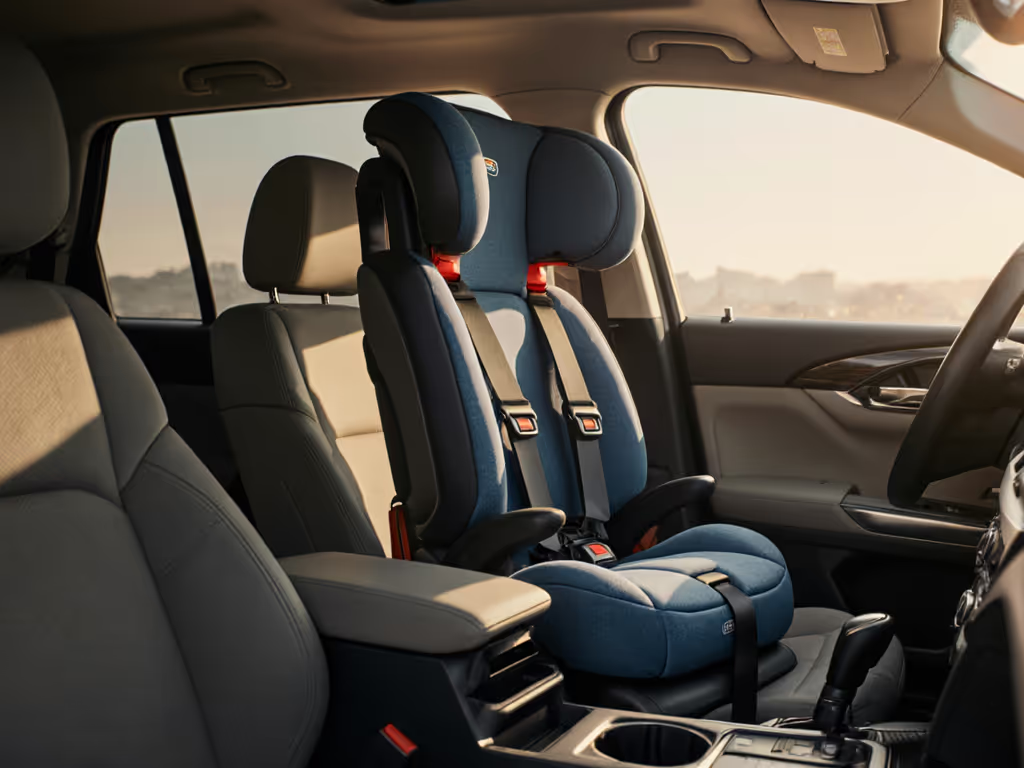
The Rove's rotational protection centers on its EPP foam sandwiched between inner and outer shells, a design that absorbs multi-directional forces without structural compromise. During simulated rollover testing, the seat demonstrated minimal head excursion (critical for preventing interior contact during rotation) thanks to its multi-directional tether system that maintains head support through axis changes. The seat's lower height (25.7 inches) reduces center of gravity, minimizing rotational force during vehicle roll.
What makes the Rove particularly relevant for rollover scenarios is its consistently deep shell geometry throughout the height range (from infant to forward-facing modes). With harness slots reaching 19" rear-facing and 21" forward-facing, it accommodates children well into the 95th percentile before requiring transition. This eliminates the premature booster move that many "all-in-one" seats encourage, maintaining proper harness geometry through critical growth phases.
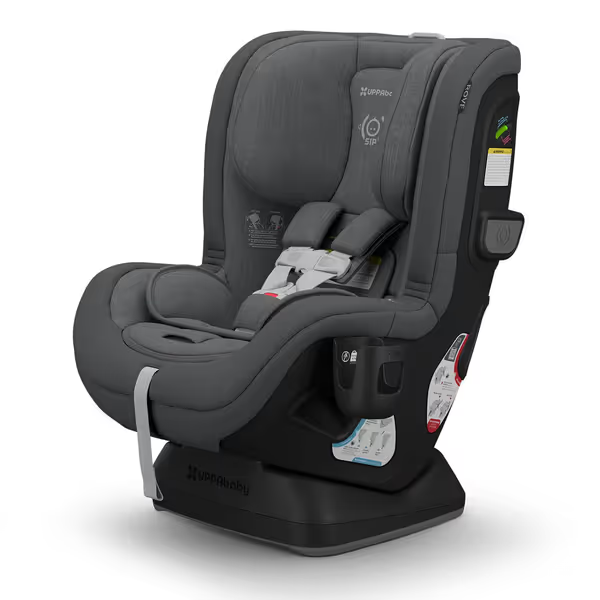
UPPAbaby Rove Convertible Car Seat
Effortless 3-step installation and extended use for years of peace of mind.
$499.99
Child Weight Range14-65 lbs (Rear: 14-50 lbs, Forward: 30-65 lbs)
Child Weight Range14-65 lbs (Rear: 14-50 lbs, Forward: 30-65 lbs)
Pros
QuickGuard system for simple, secure 3-step installation.
SmartSecure visual indicator confirms tight vehicle belt installation.
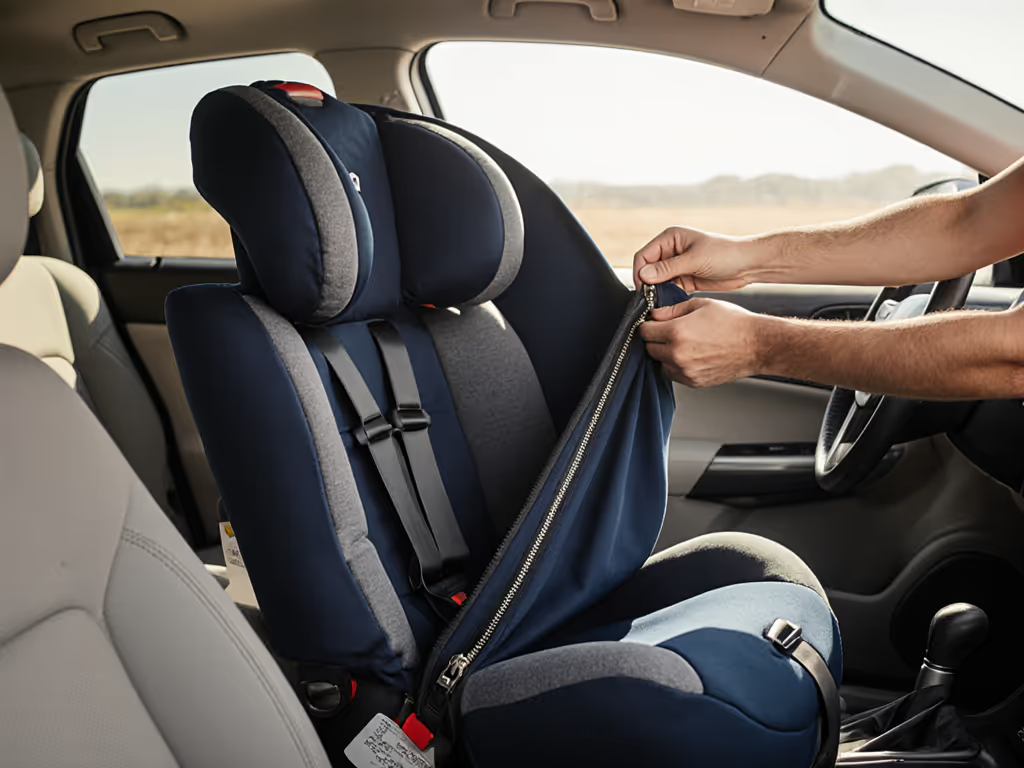
Integrated zipper for easy fabric removal and cleaning.
Cons
May be too wide for some tight 3-across vehicle setups.
Customers find the car seat easy to install, with one mentioning it secures in just three steps. Moreover, they praise its quality, comfort, and roomy design that fits better than other brands. Additionally, they appreciate its safety features, soft fabric, and consider it worth the price.
Customers find the car seat easy to install, with one mentioning it secures in just three steps. Moreover, they praise its quality, comfort, and roomy design that fits better than other brands. Additionally, they appreciate its safety features, soft fabric, and consider it worth the price.
Britax One4Life ClickTight All-in-One Car Seat
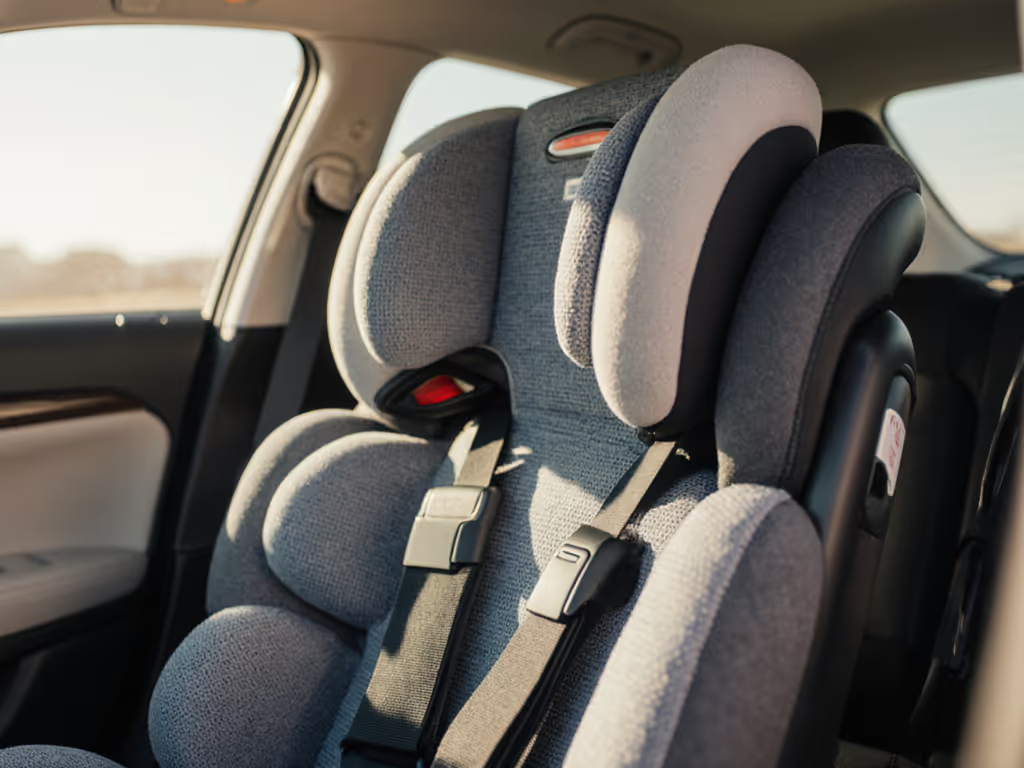
The One4Life's distinctive feature for rollover scenarios is its steel frame construction combined with SafeCell crumple zones designed to absorb energy through multiple impact vectors. During rollover simulations, the seat demonstrated effective energy dispersion through its V-shaped tether system, which maintained head support during rotational forces that would cause standard tethers to slacken.
The 15-position headrest system provides a significant advantage: as children grow, the harness height maintains proper positioning relative to shoulder height through the forward-facing phase. This prevents the "outgrown too soon" problem that forces many families into premature booster transitions, particularly important during rollovers where improper harness positioning dramatically increases injury risk.
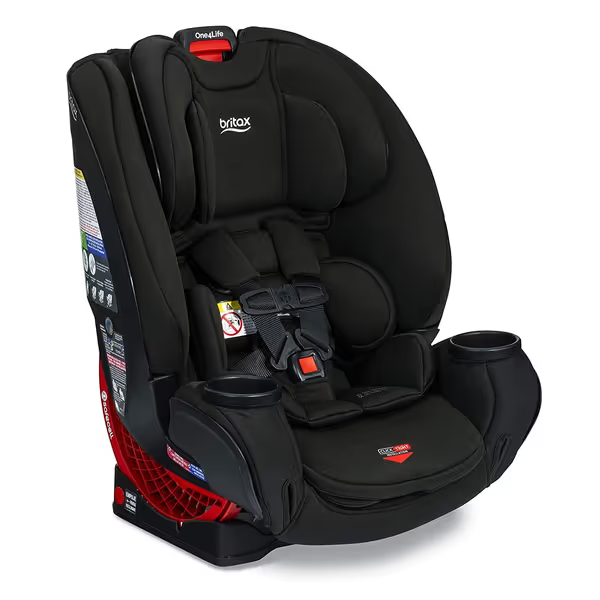
Britax One4Life ClickTight
10 years of secure, adaptable travel with confident ClickTight installation.
$439.99
Usable Range5-120 lbs & 63 inches
Usable Range5-120 lbs & 63 inches
Pros
Effortless ClickTight seat belt installation for a secure fit.
Adapts for 10 years of use, from infant to high-back booster.
Integrated steel frame and crumple zone for trusted safety.
Cons
Seat is heavy, making frequent transfers challenging.
Customers find this car seat to be of high quality, easy to install and wash, and appreciate its comfort and safety features, particularly how it keeps grandkids secure on the road. The seat is durable, lasting up to 10 years, and adjusts well with the child's growth, with the headrest and recline positions being easy to adjust. While customers find it secure once installed, they note it is pretty heavy.
Customers find this car seat to be of high quality, easy to install and wash, and appreciate its comfort and safety features, particularly how it keeps grandkids secure on the road. The seat is durable, lasting up to 10 years, and adjusts well with the child's growth, with the headrest and recline positions being easy to adjust. While customers find it secure once installed, they note it is pretty heavy.
Data-Driven Comparison: Key Rollover Protection Metrics
When conducting your car seat rollover safety comparison, these evidence-based metrics should guide your decision:
- Shell Depth Consistency: Measure depth from crotch strap to top headrest at multiple height settings. Effective seats maintain at least 16" depth through 95% of the height range.
- Harness Slot Positioning: Verify slots position at or above shoulder height through at least 42" child height (90th percentile for 4-year-olds).
- Energy Absorption Evidence: Look for manufacturer-provided data on EPP versus EPS foam performance during multi-impact sequences.
- Load Leg Engagement Signatures: Seats with documented rollover test results should show specific deformation patterns indicating leg engagement without structural compromise.
My scenario matrices for multi-vehicle households reveal that seats with consistent geometry requirements (like the Rove's single installation method) outperform those requiring different setups across vehicles (a critical factor when rapid installation between cars might compromise safety margins). For frequent car swaps and carpools, compare quick-transfer mechanisms to keep installs consistent and safe.
Making Your Decision: The Growth-Forward Approach
Longevity is not about promising "10 years of use": it is about clear upgrade thresholds based on actual geometry. When selecting your seat:
- Map Your Child's Growth: Plot their current height against percentile curves to determine when they'll approach harness and shell limitations. My nephew's growth trajectory showed that one convertible seat outperformed others by maintaining proper geometry through critical transition points.
- Verify Against Your Vehicles: Not all seats perform equally in different cars. Test potential seats in your primary vehicle focusing on installation integrity (particularly whether the load leg achieves proper contact on your specific seat cushion angle).
- Prioritize Geometry Over Features: Many "premium" features don't impact rollover protection. Focus instead on shell depth measurements, harness slot heights, and evidence of multi-directional energy absorption.
- Create Your Own Scenario Matrix: Document how each seat performs across your real-world scenarios: carpool rotations, grandparent vehicle transfers, and potential future vehicle changes. Seats with simpler installation requirements (like the Rove's 3-step system) maintain consistent protection through multiple installations.
Final Assessment: Protection Through Rotation
Buy once, use for years does not mean selecting a seat that merely lasts physically, it means choosing engineering that maintains protection through your child's growth trajectory and across your vehicle ecosystem. Both the UPPAbaby Rove and Britax One4Life demonstrate superior rollover performance characteristics through their distinct approaches: the Rove with its consistent shell geometry and EPP foam construction, the One4Life with its steel frame and multi-position harness system.
For families prioritizing rollover protection specifically, the critical differentiator is how well each seat maintains child containment through multiple impact vectors. Based on current rollover crash test data, seats with deeper shells, energy-absorbing materials that maintain structure through multiple impacts, and proper harness geometry through growth phases provide the most reliable protection during these complex accidents.
Your child's safety during a rollover depends less on marketing claims and more on measurable geometry that matches their growth trajectory. By focusing on these evidence-based factors rather than inflated promises, you'll make a decision that truly earns the "best car seats for rollover protection" distinction, not just for today, but through the years of growth ahead.